

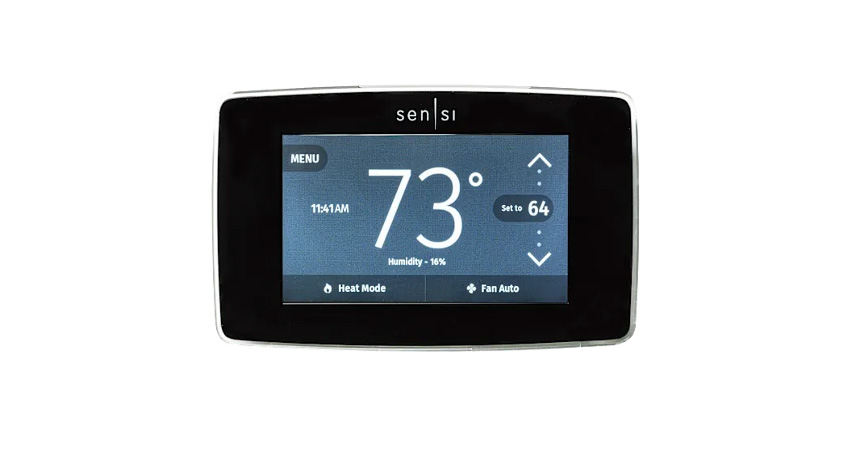
Selecting the right thermostat is an important part of helping customers safely, comfortably, and confidently operate their heating and cooling systems. For seniors, people with disabilities, and customers who may need additional support, accessibility features can reduce confusion, support independence, and help prevent operational errors that affect comfort and personal safety. Considering these needs during project planning can also reduce customer frustration and help avoid unnecessary follow-up visits by HVAC technicians.
Visibility is one of the most important accessibility considerations. Many smart thermostats include installer setup options that can improve readability, such as adjustable brightness, backlighting, proximity sensing, or permanent display lighting. These features can be especially helpful for customers with low vision who need to read and adjust settings more easily.
High-contrast displays, large numbers, and clear text can also make thermostat operation easier by reducing mistakes due to the misreading of settings. Thermostats with physical buttons can provide a straightforward experience for customers who struggle with digital interfaces or multi-layered menus.
Customers with mobility limitations may benefit from voice-command capabilities or remote access through compatible smartphone apps, such as Amazon Alexa, Apple HomeKit, and Google Assistant. These options allow customers to adjust temperature settings without needing to reach the thermostat directly.
For customers who may need additional support, lockout features can help prevent accidental setting changes that could cause unsafe temperature swings. Caregivers may also be able to monitor a home’s indoor climate remotely through mobile apps, such as Resideo or Sensi, to help maintain safe and comfortable conditions.
Choosing programmable thermostats with accessibility in mind helps support customer independence, comfort and safety while contributing to long-term HVAC system success. Keep in mind that Smart Thermostats are not appropriate for every customer and should not be installed in homes with unreliable internet or for customers that do not have the ability to ensure that the thermostat remains connected to the internet.